
Industry Training Courses - Walking
First two walking/cycling webinars delivered for NZTA in 2019 now available for viewing/listening here.
Engineers and planners with an interest or mandate for walking, plus interested members of walking advocacy groups, are invited to attend the one-day Fundamentals of Planning and Design for Walking course. You'll learn from leading practitioners about the policies and practices that can make our towns and cities better for walking.
There are many reasons why New Zealanders need to walk more. Just a few of them are congestion, pollution, peak oil, the obesity epidemic and climate change. Yet many barriers exist to discourage people from walking - physical, social, cultural and institutional.
Streets around the world are being opened up again to people on foot, with spectacular benefits to communities in terms of traffic and personal safety, economic well-being, community cohesiveness and children's health.
Guidance and tools published by the NZTA (e.g the Pedestrian Network Guidance) enable better practice in meeting user needs. This course aims to ensure participants are inspired, understand the key principles behind the guidance, and are equipped with the basic skills needed to apply them. The issues will be illustrated in practice by an audit of existing conditions for walking in nearby streets. Participants will work on project examples, choosing the appropriate pedestrian facilities and grappling with those "devil in the detail" design issues that make all the difference.
The NZ Transport Agency is keen to see as many practitioners as possible attend these courses.
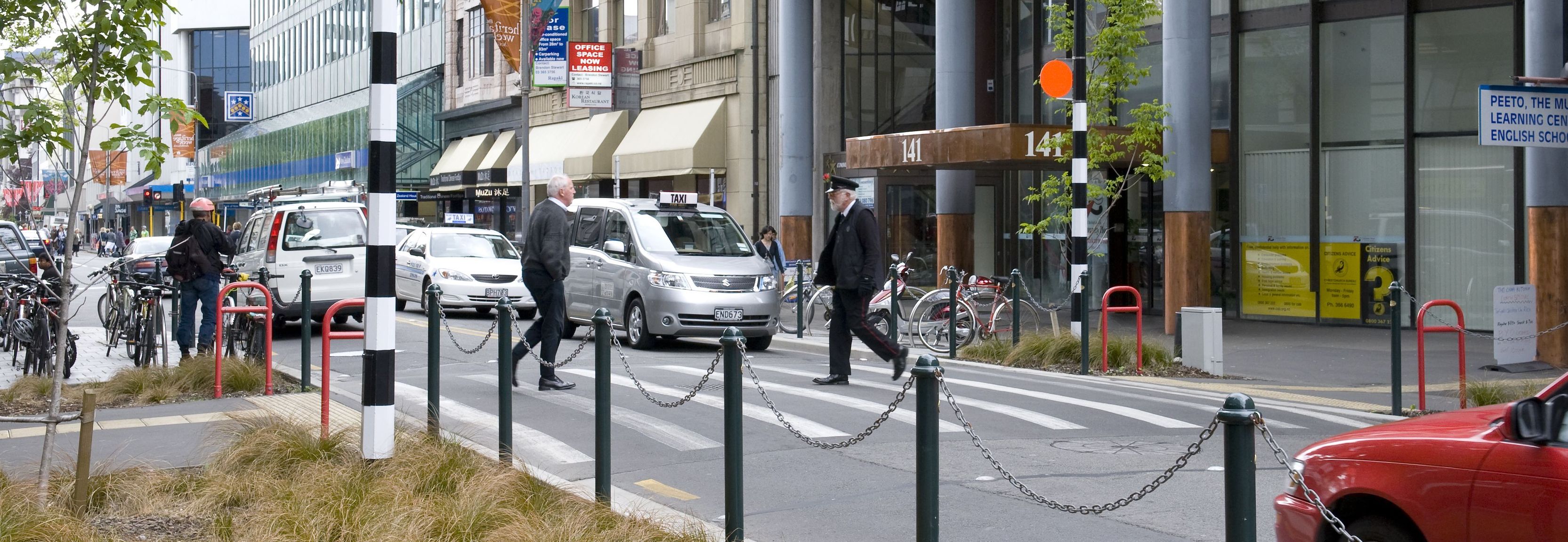
Anybody involved in land transport planning or design should consider taking this course, from the new graduate to the engineer with 20+ years experience. We also accept a number of advocacy or other volunteer community representatives to attend this course at a reduced rate.
Future Courses
Currently no walking courses have been scheduled yet for 2024. To express interest in taking part in a course, please contact Glen Koorey.
Course Presenters
Presenters for the last Auckland course were Tim Hughes from NZ Transport Agency and ViaStrada Director Axel Wilke. Glen Koorey has also presented this course in the past.
Tim Hughes (NZTA) has over 25 years experience as a road safety engineer, managing projects to provide guidance on provision for pedestrians with different needs and auditing new works to assess walkability and ensure that they are walking friendly. He led the development of various NZ guidelines for walking, including the Pedestrian Planning and Design Guide (PPDG; 2008) and RTS 14, guidelines for facilities for blind and vision-impaired pedestrians.